October 2021
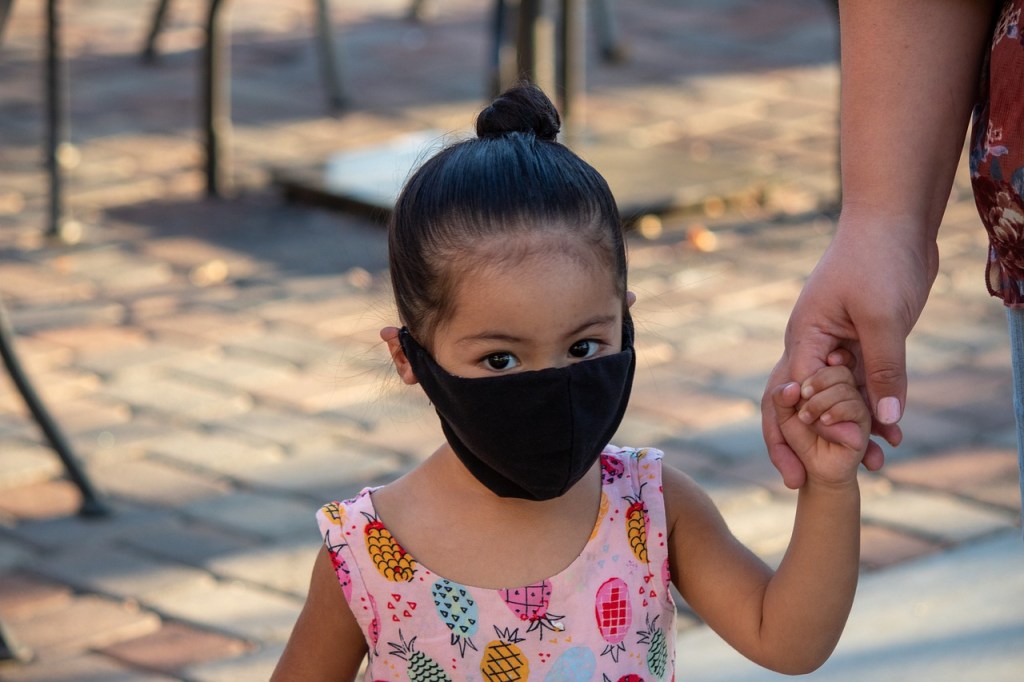

In most cases, parents swear to protect their children; and will often stop at nothing to do so. If COVID-19 did anything, it changed the way many parents view parenting and how they protect their kids. As parents and kids spent more and more time together the multitude of diverse parenting styles was highlighted, leaving many to wonder what it means to correctly parent your children.
Globally, COVID-19 had a profound effect on everyone, and children were no exception, regardless of their innocent naivety. Masks, nasal tests, vaccines, and pandemics are all things many adults struggle to cope with and agree on, so how do we assure our children that the world isn’t ending?
Image provided by unknown photographer
Currently, the Center for Disease Control recommends vaccination for everyone 12 and older. According to Our World in Data, 56 percent of the United States is fully vaccinated against COVID-19. The United States Census Bureau states that children under 18 years-old make up roughly 22 percent of the population and experts say they are now playing more roles in the vaccination process. Dr. Anthony Fauci, Director of the National Institute of Allergy, and Infectious Diseases (NIAID) and the Chief Medical Advisor to the President, proposed that children 5 to 11 can expect to receive one dose by Thanksgiving, allowing for full vaccination for the holiday season.
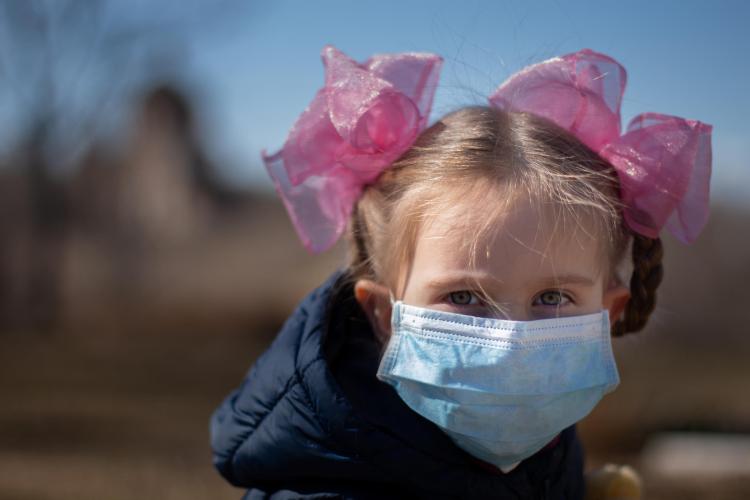
A child in a medical mask during a coronavirus pandemic
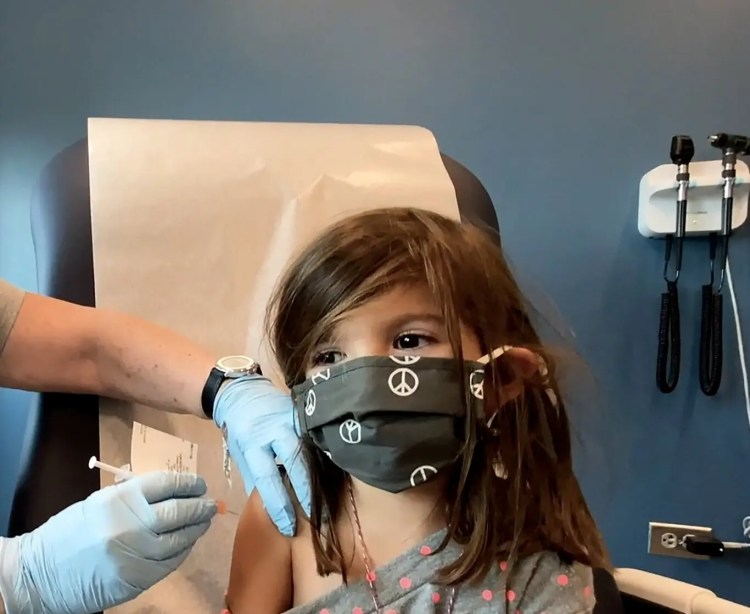
The American pharmaceutical and biotechnology corporation, Pfizer, has worked closely with the German biotechnology company, BioNTech SE; to create a vaccine against COVID-19. The Food and Drug Administration officially approved their vaccine on Aug. 23. Last month, a Pfizer-BioNTech vaccine trial was conducted on children at Duke University. According to Dr. Emmanuel Walter, Professor of Pediatrics, and captain of Duke’s participation in the study, children were given two 10 ug doses 21 days apart, (those 16 and older receive 30 ug) and were found to increase the child’s likelihood of developing the antibodies needed to protect them from serious illness, hospital stays, and even death due to the virus.
“Young kids have exposures too. They are in settings like day care, nursery school, preschool (and) play dates. They are not home and isolated by any means or just going to visit relatives. I think children make up a significant part of the population. Early in the pandemic, I think we thought this was more of a disease that affected older adults and older adults with comorbidities.”
According to Pfizer and BioNTech, the vaccinated children have a 91 percent reduced risk of developing a symptomatic infection. The same data also indicated no cases of heart muscle inflammation (myocarditis) or pericarditis, which is when the outer lining of the heart becomes inflamed. However, some children experienced similar minor side effects that adults reported such as: fatigue, headache, muscle pain and chills.
On Oct. 26, the FDA advisory board plans to meet and discuss the data and authorization for the Pfizer-BioNTech vaccine for children 5 to 11.
Pfizer-BioNTech vaccine trial last month at Duke University. Credit: Shawn Rocco/Duke University

According to Pfizer’s website, they are running clinical trials on children using phases and different age groups. First, children 5 to 11, then 2 to 5, and then those 6 months to 2 years old. Once an acceptable safety profile has been established for children 6 months old, they may begin to evaluate the vaccine for infants. The clinical trials will enroll approximately 4,500 children 6 months to 11 years old at more than 90 trial sites in the U.S., Finland, Poland, and Spain. Pfizer’s website also states that children under 15 account for 26 percent of the global population and play a huge role in herd immunity against COVID-19.
Vaccinations for children have always been controversial. According to a survey conducted by researchers from Northwestern, Harvard, and Rutgers University as part of the COVID States Project, the top concerns parents have for vaccinating their young children are substantial testing, long-term health effects, and how new the vaccine is. The same study also found that parents, especially mothers, between 18 and 25 are most concerned about these issues (Report #61).
Mother and child participating in online school. Photo by Julia M Cameron on Pexels.com
The United Nations Children’s Fund, UNICEF, is responsible for providing aid to children globally. They recommend vaccinating children against diseases, and state that vaccines alone have prevented an estimated 21 million deaths between 2000 and 2017. They state that vaccines are very safe for children, as countries only register and distribute vaccines to children that meet rigorous quality and safety standards.
 Online Portfolio
Leave a comment